The Peeled Garlic: Why to Use, How to process, How to store, and how to Cook
Garlic is a very essential ingredient in food worldwide – it is essential element in home-cooking, large-scale food industries, and hotels. It has Due to its strong aroma, medicinal properties, and extensive culinary applications. The demand for peeled garlic is ever increasing due to increasing requirements of food products in which it is used.
In home kitchens, garlic can be peeled by hand. But when it comes to hotels or industries, where time, convenience, consistency, scale of operation, quality, and worker efficiency are crucial, peeled garlic proves to be superior by providing efficient, hygienic, and cost-effective solution.
In this article, we are exploring peeled garlic: why and where to use it, how to produce it (with the help of dry peeling technology using compressed air), how and where to store it, its innovative recipes, the machinery used for producing peeled garlic, the advantages of garlic products for home, food industry, and catering and hotel sectors.
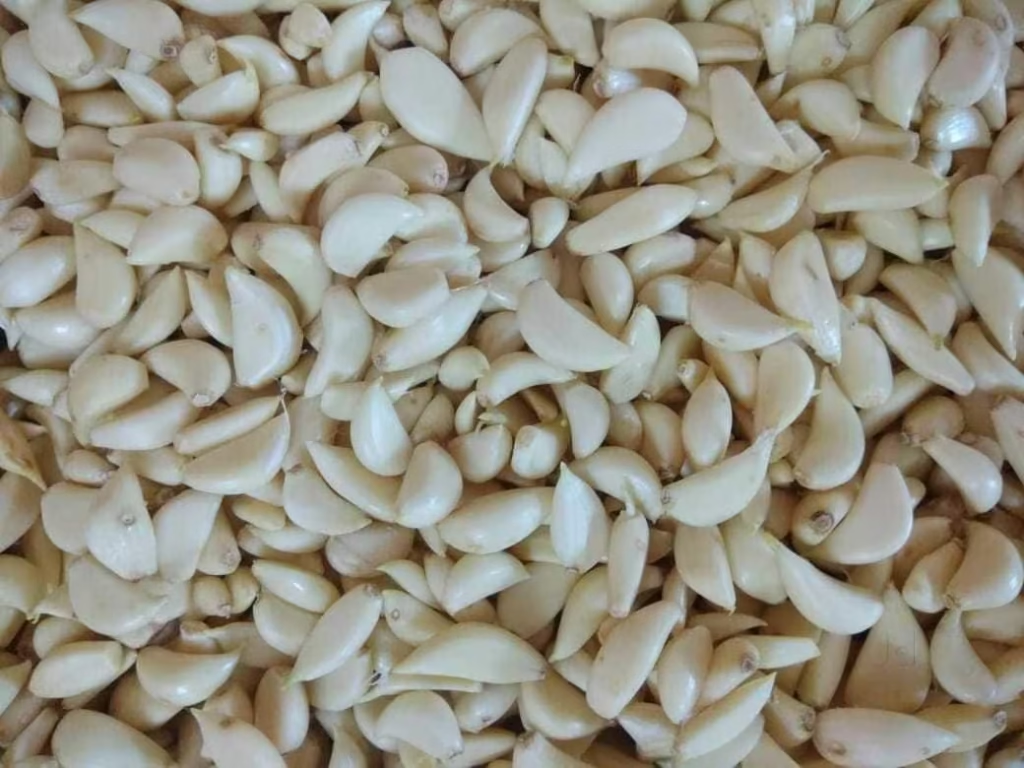
What is Garlic Peeling Plant?
It is a set of machineries required for depoding, grading, removal of outer skin of garlic cloves without damaging the edible portion, sorting and packing. These plants use controlled air pressure, friction, or mechanical action to separate garlic peels efficiently.
1 Why should we use peeled garlic?
In its natural form, garlic is a bulb formed containign cloves wrapped in many papery layers of skin. — It is full of aroma and flavour. Preparing garlic for daily use is not that easy. Peeling garlic cloves at home or in a commercial kitchen is a very laborious, difficult, and time-consuming task. This is where peeled garlic comes into the picture.
Here are some key benefits of using peeled garlic.
1.1 Convenience and Time Saving
Whether you’re a home cook preparing daily food or a chef in a busy hotel kitchen (where you need to prepare hundreds of meals) time is a valuable thing. Peeled garlic eliminates the repetitive and tedious task of peeling each clove individually.
1.2 Consistency in Cooking/ preparation
Food processing units and chefs and require uniformity in their output. Hence they choose Peeled garlic cloves that provide:
- Uniform cooking performance
- Predictable flavor intensity
- Standardized size where size matters
- Quality: Manual peeling often results in nonuniformity, cloves left with unpeeled skin.
To ensure consistency is main objective for both recipe maker, large-scale meal preparation or food processing units.
1.3 Reduced Waste
Peeling garlic manually often results in leaving small cloves unpeeled or are left as is and thrown. Peeled garlic minimizes waste and ensures nearly 100% usable product. In factory, while peeling and ensuring uniform size, small size cloves can be used as raw material for other biproduct such as minced garlic, garlic beats, ginger garlic paste etc.
1.4 Food Safety and Hygiene
Handling garlic cloves repeatedly and manually can expose them to contaminants. Pre-peeled garlic cloves packaged under hygienic conditions reduce the risk of contamination.
2 Process of garlic peeling / preparation of peeled garlic.
The process starts from selection of raw material to packing and distribution and can be categorized into following headings.
- Selection of Raw Material: Choosing the Best Garlic for Peeling
- Depoding / Crushing
- Sorting and Grading
- Peeling (including Dry Peeling with Compressed Air)
- Final Sorting (by size, quality)
- Packing
- Cold Storage & Distribution
These steps are seen in detail in following text
2.1 Selection of Raw Material: Choosing the Best Garlic for Peeling
It is very important to understand that the quality of peeled garlic depends upon the quality of raw garlic bulbs.
3.3.1 Garlic variety matters
All garlic are not equal. There are Hardneck varieties (rich flavor but fewer cloves) and Softneck varieties (numerous cloves, easier to peel). Softneck types are generally preferred for peeling because they have more uniform cloves and easier skin removal.
3.3.1 Size and Maturity
Large, mature bulbs with firm cloves are preferred:
- The skin comes off more easily.
- Cloves do not bruise easily during processing.
- Higher yield of usable product
3.3.1 Quality Standards
Garlic must be:
- Free from decay. Black, brown or rotten cloves result in quality deterioration.
- Free from mold and pests.
- Stored at proper temperature and humidity prior to peeling.
Selection of raw material is the first critical step that determines the final quality of peeled garlic.
2.2 Depoding / Crushing
Before garlic cloves can be peeled, the garlic bulbs must first be broken down into individual cloves.
3.3.1 WhatisDepoding?
Depoding is the process of:
- Mechanically breaking the garlic bulb
- Separating individual cloves from the bulb
3.3.1 Depoding Techniques.
In industrial settings, depoding can be done using:
- Mechanical depoders: They are rollers, rubber hammers, tumblers, or vibrating systems designed to release cloves without damage
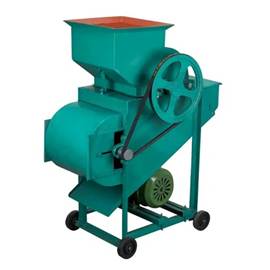
Mechanical Depoding Machine
- Automated conveyors that move garlic bulbs through the depoding system
Proper depoding ensures:
- Minimal damage to the cloves (important for peeling yield)
- Faster downstream processing
2.3 Sorting and Grading
Once the cloves are separated, they must be sorted either manually or mechanically.
3.3.1 Manual Sorting
Even in automated plants, trained staff inspect cloves to remove:
- Damaged cloves.
- Brown or decayed cloves.
- Very small or oversized cloves.
- Heads of garlic bulb.
- Long white stem in the middle of garlic bulb.
3.3.1 Automatic Size Sorting
Machines can also help sort cloves by size and quality using:
- Optical sensors generally used after peeling.
- Vibratory sorters.
- Size grading screens. Many times, size grading sensors are integral part of depoding machine.
This ensures that only high-quality cloves go to the peeling stage.
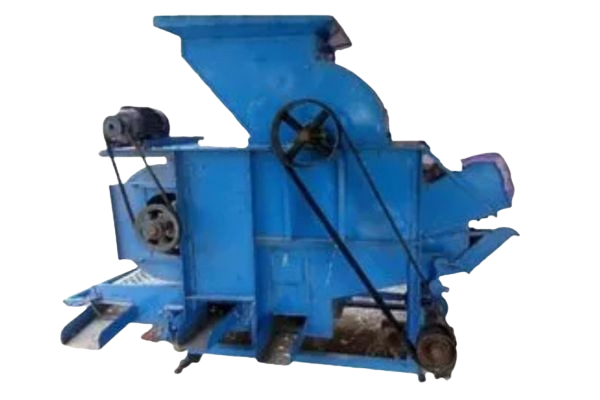
Mechanical depoders with inbuilt size sorter
2.4 Peeling (including Dry Peeling with Compressed Air)
Garlic peeling can be carried out using different techniques. The main methods are:
- Manual Peeling
- Wet Peeling
- Dry Peeling (especially with Compressed Air)
In industrial plants, dry peeling with compressed air is a widely adopted technology due to efficiency and hygiene.
3.3.1 What is Dry Peeling?
Dry peeling is a process where garlic cloves are peeled without the use of water or chemicals. Instead, compressed air gently and efficiently removes the outer skin of garlic cloves.
The advantages include:
- No water residue
- Less microbial risk
- Preserved garlic flavor and texture
- Lower moisture content (better shelf life)
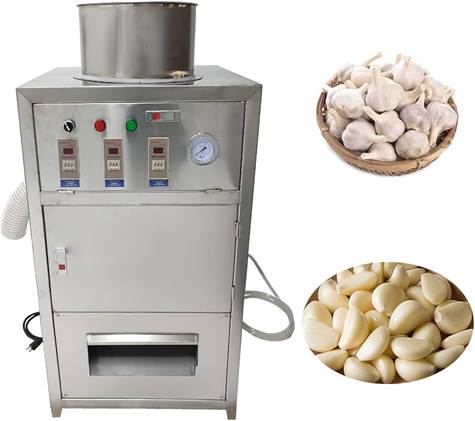
A small size peeling machine for small garlic peeling plants
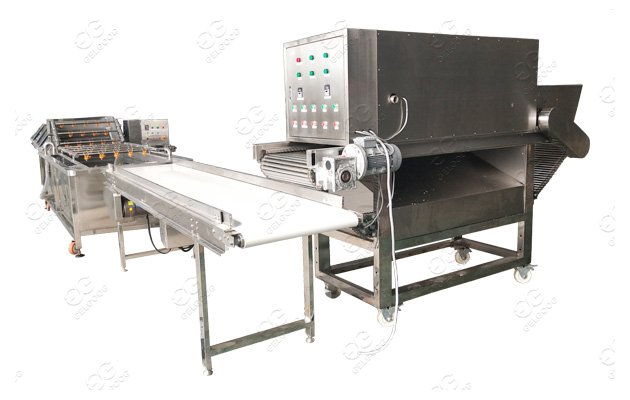
Belt type peeling machine for large acale automated plant
3.3.1 How Compressed Air Peeling Works
- Cloves enter the peeling chamber
- In drum type machine, high-pressure compressed air jets are directed at particular angle on the cloves
- In belt type machine rotating air jets are bombarded on moving cloves on horizontal belt.
- The rapid air flow causes the skins to loosen and lift away
- Remaining skins are removed through:
- Air suction on case of belt type peeling machine
- Air flow in case of drum type peeling machine
- Mechanical separation
This method is:
- Fast
- Gentle
- Scalable
3.3.1 Why Compressed Air Peeling is Preferred
In comparison to manual or wet peeling:
- Minimal damage to garlic cloves
- Avoids decay due to water engrossed into cloved during wet peeling.
- No need for drying after peeling
- Higher throughput (important for commercial scale)
- Better yields — more peeled garlic per batch
2.5 Final Sorting (by size, quality)
After peeling, another round of sorting ensures the highest quality output.
3.3.1 What Happens in Final Sorting?
- Removal of unpeeled or partially peeled cloves
- Separation based on size
- Checking based on color and / or defects
3.3.1 Tools and Techniques Used
- Optical sorters that identify blemishesMechanical sieves to organize sizesManual quality inspection for premium products
This step ensures that what goes into packaging is consistent and market-ready.
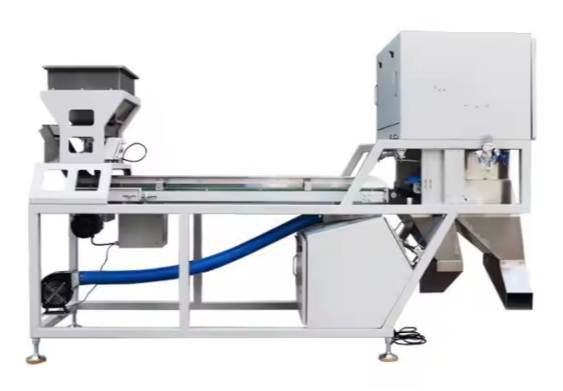
Color sorting machine
2.6 Packing
Packaging is the final processing step before storage or distribution.
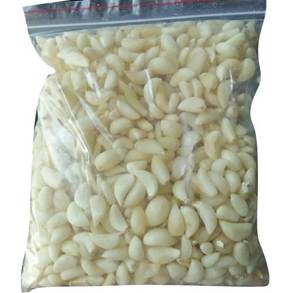
3.3.1 Packaging Types
For peeled garlic products, packaging options include:
- Vacuum-sealed bags. (Vacuum packaging is applicable for dry / dehydrated matter only. It is not adapted for peeled garlic as peeled garlic has water content, it releases vapor due to which the sealed bag bulges and purpose of packing is not met)
- Packaging in vented bag. The bags are made porous or holes are made in the bag for natural respiration and release of vapor in atmosphere.
- Jar packaging is adapted for long storage.
- Modified atmosphere packaging (MAP)
- Bulk packaging for food industry use.
3.3.1 Labeling and Traceability
It is the optional activity and depends from customer to customer. Good packed products also include:
- Batch codes
- Best before date
- Weight and nutritional info
- Storage instructions
This improves food safety and customer confidence.
2.7 Cold Storage & Distribution
Storage and distribution depends upon the quantity required, quantity produced. Generally peeled garlic is not stored in fridge as after removing out of fridge, the moisture accumulates on the surface due to atmospheric humidity. This results in start of decay. Garlic are generally kept on cool surfaces with small wind flowing over it thus removing the moisture if any and keeping it as dry as possible. However this flow of wind reduces the weight due to forced evaporation and loss of moisture. But this do not affect in aroma content of the garlic.
If it is to be frozen suggested temperature is 0–4°C (32–40°F). However after removing out of fridge, it needs to bring to atmospheric temperature before bringing into contact of air to avoid deposition of moisture on cold skin.
Distribution of large quantity is made in net bags or bags with vents for atmospheric respiration. For small quantity if polythene bags are used, they are vented properly before transportation.
Garlic cloves can be stores in by submerging in oil, saline (water saturated with salt), vinegar for long term preservation.
3 A Brief on Machines Required for above process of Garlic Peeling.
Setting up a commercial peeled garlic plant requires specialized equipment. Below is a breakdown of machines used in a modern peeling facility:
3.1 DepodingEquipment
- Garlic depoders
- Vibratory conveyor belts
- Clove separators
3.2 Sorting and Grading Machines
- Optical sorters
- Size graders
- Vibratory tables
3.3 Garlic Peeling Machines
There are several peeling technologies:
3.3.1 Dry Peeling Machines (Compressed Air Peeler)
- Uses pneumatic pressure to remove skins
- High-speed and hygienic
3.3.1 Mechanical Peelers
- Drums, rollers, or friction belts
- May be combined with air suction systems
3.3.1 Peeling using water instead of compressed air
This results in absorption of water into cloves and hence the life is shortened and quality degrades if not consumed quickly
3.4 Final Sorting Machines
- Optical quality checkers
- Sorters by size
- Reject ejection systems
3.5 PackingMachines
Depending on packaging format:
- Vertical form-fill-seal (VFFS) machines
- Jar filling lines
- Vacuum sealers
- Labeling machines
3.6 Auxiliary Equipment
- Compressed air systems
- Conveyors
- Refrigeration or cold rooms
- Metal detectors (for food safety)
The combination of these machines ensures efficiency, hygiene, and high capacity in peeled garlic production.
4 Cooking With Peeled Garlic Cloves — Practical Ways to Use Them
Here are popular cooking techniques where peeled garlic cloves shine:
4.1 Sautéing
Sautéed garlic adds rich flavor to:
- Stir-fries
- Vegetable dishes
- Pasta sauces
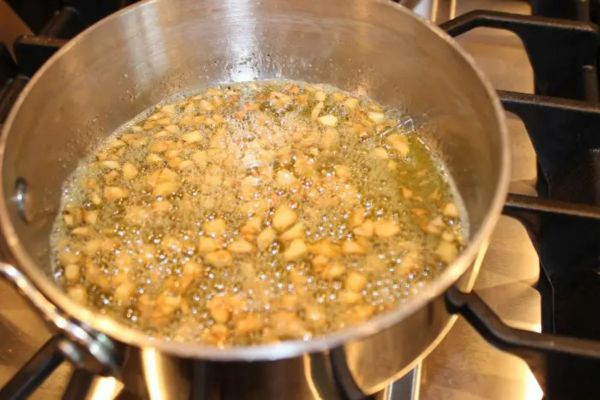
Garlic Sauting
Tip: Add garlic toward the end of oil heating to avoid burning and bitterness.
4.2 Roasting
Roasted garlic cloves become sweet, mellow, and caramelized — excellent for:
- Mashed potatoes
- Roasted vegetables
- Bread spreads
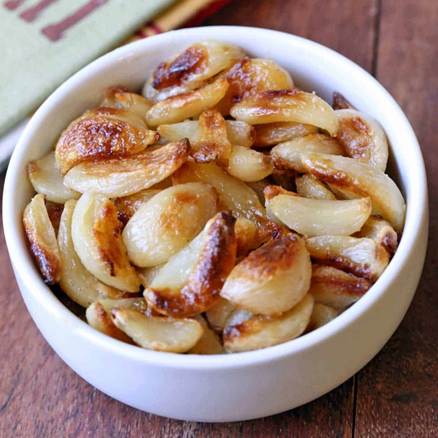
Garlic Roasting
Roast at 180–200°C (350–400°F) until golden.
4.3 In Soups and Stews
Garlic adds depth to soups and stews:
- Chicken soup
- Vegetable broth
- Lentil stews
Toss whole cloves or crush after cooking for richer notes.
4.4 Marinates and Rubs
Use peeled garlic cloves to:
- Crush and add to marinades
- Blend into rubs for meats
- Season tofu or vegetables
It enhances flavor absorption and complexity.
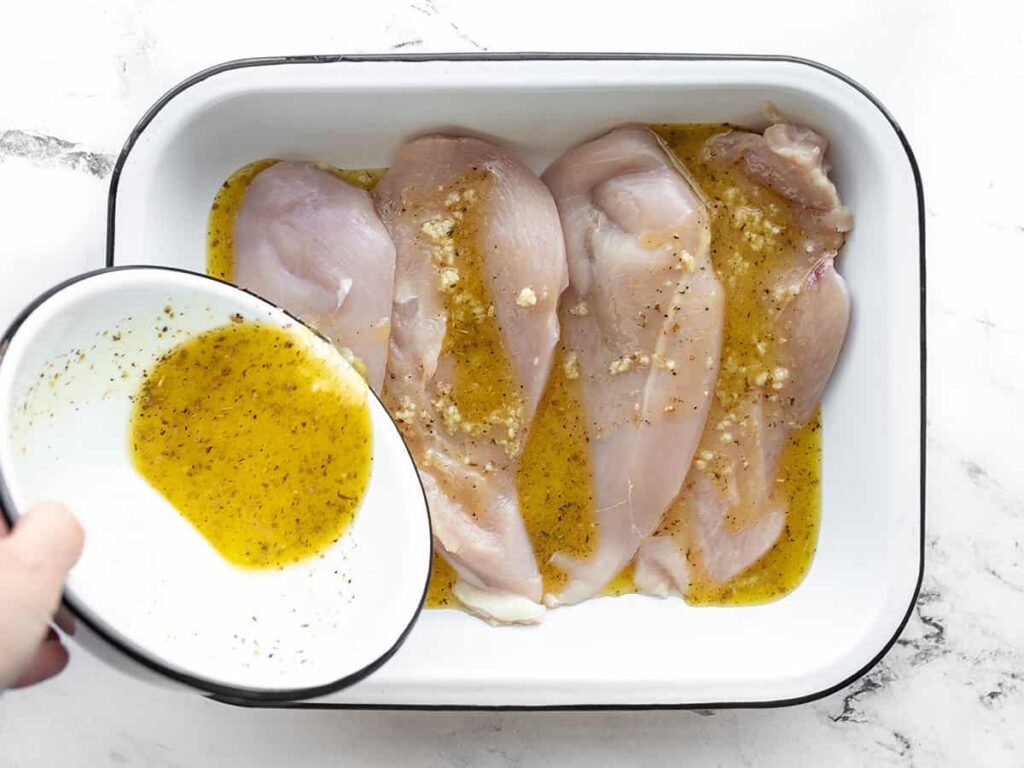
Marinated chicken
5 Garlic Products for Home, Hotel & Food Industry Use
In addition to peeled garlic cloves, there are various garlic products that suit different needs:
| Garlic Product | Best Use |
| Chopped Garlic | Easy flavor bursts in stir-fries |
| Garlic Flakes | Cooking, garnishes |
| Garlic Bits | Snack toppings, seasonings |
| Garlic Paste | Sauces, marinades |
| Garlic Powder | Spice blends, rubs |
| Minced Garlic | Quick everyday cooking |
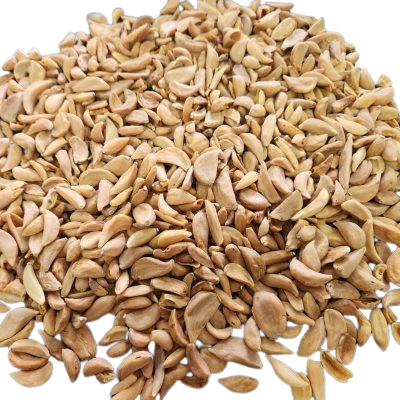
Garlic Flakes
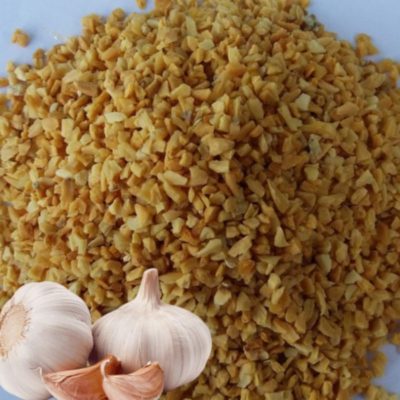
Chopped Garlic
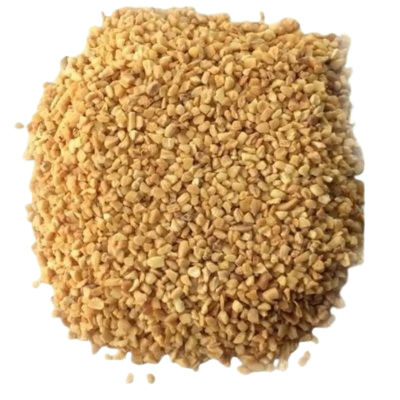
Garlic Bits
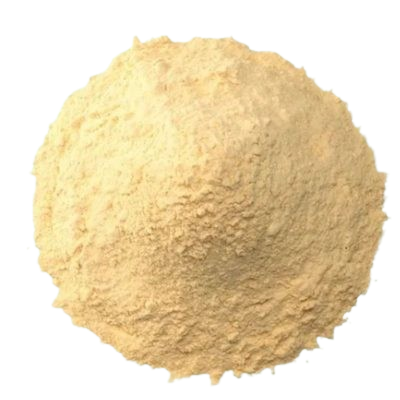
Garlic Powder
All above products serve:
- Home cooks who want convenience
- Hotels needing consistency
- Food processors aiming for scalability
6 Health Benefits of Garlic
Garlic isn’t just tasty — it’s healthy. Some well-researched benefits include:
6.1 Rich in Beneficial Compounds
Garlic contains:
- Allicin (antioxidant)
- Vitamins B6 and C
- Manganese
6.2 Immune System Support
Studies suggest garlic may help:
- Reduce severity of colds
- Support immune defense
6.3 Heart Health
Garlic can:
- Help lower blood pressure
- Improve cholesterol levels
6.4 Anti-Inflammatory and Antioxidant
Garlic’s compounds help fight oxidative stress and inflammation — key to overall wellness.
7 Benefits of Peeled Garlic for Food Industry and Hotels
Why do chefs and food businesses prefer peeled garlic?
7.1 High productivity, Time and Labor Savings
- Improves kitchen efficiency.
- Reduces prep time
- Allows staff to focus on core cooking
7.2 Product Consistency and uniform quality
- Standard clove size
- Predictable flavor
- Reliable performance
7.3 Reduced loss due to Wastage
- Less waste from peel disposal
- Better yield per kilogram
7.4 Better Hygiene
- Less handling
- Lower cross-contamination risk
- Meets modern food safety standards
7.4 Versatile application
Peeled garlic can be used for:
- Fresh peeled garlic supply
- Garlic paste manufacturing
- Dehydrated garlic flakes and powder
- Frozen garlic products
- Export markets
Together, these advantages make peeled garlic an essential in commercial kitchens, food manufacturing lines, and hospitality operations.